
Navdha Bhakti – Introduction

When I first heard this term, Navdha Bhakti, I thought it meant nine ways, nine steps, or nine types of devotional expression for the Divine. Recently, I learnt that Navdha bhakti are the nine pillars which a sincere seeker practices on their path to liberation. Practicing one pillar does not necessarily exempt the devotee from practicing the remaining eight.
This journey towards God – realization as described in the Srimad Bhagavatam and Ramcharitmanas, require the seeker to imbibe all the nine pillars, to help develop intense love and devotion, which fosters a deep connection and ultimately culminates in merger with the Divine. We have many saints and kings who have attained God realization by actively practicing only one of the nine pillars. But the key point to be noted is the practice of just one kind of bhakti, immersed them or imbued in them all the remaining eight and they attained their goal of God realization.
I am trying to put across my understanding and hopefully I will be able to do some justice! Any mistakes or misunderstandings, or disagreements are all mine, and my learning is an ongoing one.
The Nine forms of Devotion (Navdha Bhakti):
Shravanam (Listening): Hearing the stories, glories, and leelas of the Lord with faith (e.g., King Parikshit).
Kirtanam (Chanting/Singing): Singing the glories of the Lord with joy and enthusiasm (e.g., Shukdevji).
Smaranam (Remembering): Constantly remembering the Divine and meditating on His form.
Pādasevanam (Serving Feet): Serving the lotus feet of the Lord or serving humanity/nature.
Archanam (Worship): Worshipping the Lord through rituals, pujas, and offerings.
Vandanam (Homage): Offering obeisances, prayers, and bowing down to the Divine.
Dāsyam (Servitude): Serving the Lord with the attitude of a devoted servant (e.g., Hanuman).
Sakhyam (Friendship): Cultivating a relationship of friendship with the Lord (e.g., Arjuna).
Ātmanivedan (Surrender): Complete self-surrender and offering of one's body, mind, and soul to God.
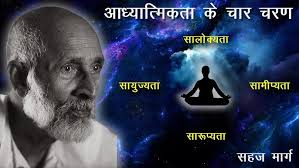
I will elaborate upon each pillar in the upcoming posts. I will also talk about the four ways (acknowledgements) of moving closer to Him on our journey towards merger, as mentioned in Heartfulness literature namely, Salokyata, Sameepyata, Sarupyata and Sayujyata. These fours terms are also found in Vaishnavism and other Hindu scriptures as types of Moksha.
“Salokyata, Sarupyata, Sameepyata, and Sayujyata (often accompanied by Sārsṭi) are the five types of Mukti (liberation) or Bhakti (devotion) recognized in Vaishnavism and other Hindu traditions, representing different levels of proximity and union with the Divine.
Sālokya (Residing in the same abode): This is the first level, where the devotee attains the privilege of living in the same spiritual planet or abode (Loka) as the Lord (e.g., Vaikuntha for Vishnu worshippers).
Sāmīpya (Proximity to the Divine): This level involves being close to the Supreme Lord, enjoying the direct presence of the Divine, similar to a close companion or personal assistant.
Sārūpya (Attaining the same form): In this stage, the liberated soul acquires a form similar to the Lord’s own divine form (four-armed, in the case of Vishnu), sharing in the Lord's beauty and form.
Sāyujya (Oneness with the Divine): This is considered the final and highest stage, where the individual soul merges completely with the Supreme Soul or Brahman, losing their individual identity in ultimate union.”
As the following posts are me trying to script my understanding, which is still an ongoing journey, the posts may stray off the topic at times, and they may also be longer than the posts I have published so far.
Any questions or further discussion points are very welcome as it will help me dig deeper and understand better.
Tulsidas Ramayana (Aranyakandam)


Comments